
History of Copywriting – The Evolution of Sales Copy
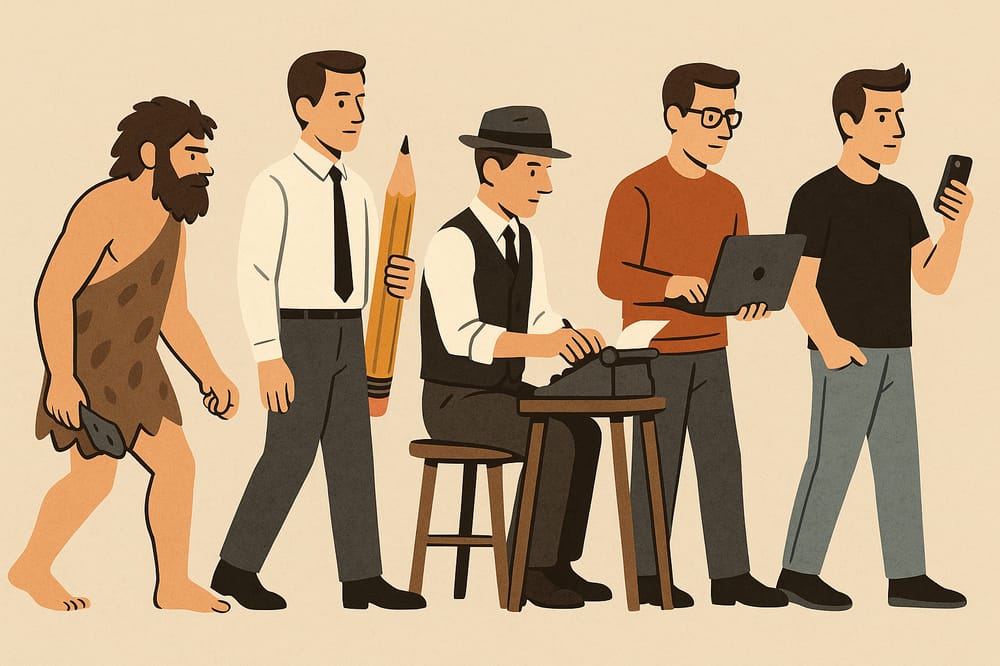
Prehistoric: Grunts and Gestures
Before words, there were gestures. Cavemen didn’t write sales letters — they used visual cues and vocal sounds to signal value. Want fire? Trade meat. The earliest “marketing” was based on mutual need and primal persuasion.
1700s - 1800s: Stage Showmen & “Snake Oil”
Salesmen began captivating crowds with theatrical performances to sell miracle tonics. These “snake oil” peddlers used exaggerated claims and emotional storytelling — laying the groundwork for what would become modern ad copy: a blend of showmanship and salesmanship.
1830s - 1890s: P.T. Barnum & the Birth of Hype
P.T. Barnum, the ultimate promoter, mastered attention-getting. He used outrageous headlines, press stunts, and mass mailings to draw crowds. While not always truthful, Barnum understood the golden rule of advertising: you have to get noticed first.
“Without promotion, something terrible happens… nothing!”
– P.T. Barnum
1898: The First Sales Funnel
Elias St. Elmo Lewis introduced the AIDA formula: Attention, Interest, Desire, Action. This became the foundation for all effective copywriting. He realized copy needed to guide prospects through a psychological journey — not just shout features.
1920s - 1940s: Trust the Brand, Trust the Sale
With radio, brands became household names. The voice of the company mattered, and so did its tone. Copywriting began to emphasize relatability, consistency, and trust. Dale Carnegie’s How to Win Friends and Influence People echoed across sales culture, pushing the importance of connection and empathy.
1940s - 1950s: TV Takes the Stage
The rise of television introduced visual persuasion. Storytelling through video paired with tight scripts. The first official TV ad (Bulova Watches, 1941) lasted just 10 seconds — yet it proved the power of words combined with images.
1960s - 1980s: Enter the Legends
This era birthed some of the greatest minds in copywriting:
- David Ogilvy, the “Father of Advertising,” focused on research-backed, benefit-driven copy.
- Eugene Schwartz, author of Breakthrough Advertising, revealed how to tap into the existing desires of the market instead of creating new ones.
- Dan Kennedy taught direct response copywriting that produced measurable results — a shift from vague “branding” to hardcore ROI.
Ogilvy's mantra? "The consumer isn’t a moron; she’s your wife."
1990s: The Internet Arrives
The first online ad banner appeared in 1994. Copy now needed to convert clicks. Email marketing was born. Long-form sales letters made a comeback online, fueled by direct response techniques of the past. Now, everyone could be a publisher — and a copywriter.
2000s: The Rise of the Sales Page
Digital marketers embraced long-scroll pages, testimonials, guarantees, and scarcity tactics. Copy had one goal: get the conversion. Headlines mattered more than ever. CRMs and split-testing allowed real-time feedback and rapid iteration. Results ruled.
2010s: Funnels & Frameworks
Russell Brunson and ClickFunnels made “funnel” a household term for marketers. Copy was now modular, built for squeeze pages, webinar opt-ins, email sequences, and upsell flows. Meanwhile, social media demanded shorter, hookier, more emotional writing.
Enter Ray Edwards with his PASTOR Framework — a structure to write compassionate, ethical sales copy: Problem, Amplify, Story/Solution, Transformation/Testimony, Offer, Response. Ray Edwards’ clients include Tony Robbins, Jack Canfield, Amy Porterfield, and Jeff Walker — all leaders in the coaching and info product space.
2013-2019: Ad Copy Goes Viral
The Harmon Brothers revolutionized ad copy with viral videos like Squatty Potty, Purple Mattress, and Poo~Pourri. Their secret? Merging humor, story, clarity, and product education into one seamless experience. Direct response in disguise.
2020s: AI, TikTok & Personality-Led Copy
Today’s copy is short-form, native to platforms, and personality-driven. Hook-first writing dominates. Attention is currency. Brands are built on trust and transformation. Copy must entertain, educate, and convert — all in under 60 seconds.
Meanwhile, AI tools like ClarityScribe help eliminate the blank page, but human emotion and strategy still win. Culture shifts fast, and great copy rides the wave — not resists it.
The Future: Emotion > Information
The tools will change. The channels will evolve. But the heart of great copy remains:
- Speak to pain
- Offer hope
- Tell a story
- Make a promise
- Ask for the action
The best copy doesn’t just sell a product — it sells a better future.
Citations
- P.T. Barnum Biography
Encyclopaedia Britannica. Retrieved from https://www.britannica.com/biography/P-T-Barnum - David Ogilvy Biography
Encyclopaedia Britannica. Retrieved from https://www.britannica.com/biography/David-Ogilvy - Eugene M. Schwartz – Author of Breakthrough Advertising
Goodreads. Retrieved from https://www.goodreads.com/author/show/285754.Eugene_M_Schwartz - Dan Kennedy – American Writers & Artists Institute
AWAI. Retrieved from https://www.awai.com/bio/dan-kennedy/ - Ray Edwards – The PASTOR Copywriting Framework
RayEdwards.com. Retrieved from https://www.rayedwards.com/go/p-a-s-t-o-r-masterclass - Harmon Brothers – Viral Marketing Experts
HarmonBrothers.com. Retrieved from https://harmonbrothers.com/ - The Origin of AIDA Sales Funnel
HubSpot Blog. Retrieved from https://blog.hubspot.com/marketing/aida-model - First Item Ever Sold Online
CNN Business. Retrieved from https://money.cnn.com/1999/03/15/technology/websales/ - ClickFunnels Milestone Report
ClickFunnels Blog. Retrieved from https://www.clickfunnels.com/blog/how-clickfunnels-grew-into-a-million-dollar-business/
Posted in:
More Articles in
ClarityScribe Featured on Product Hunt: The AI Writing Tool That’s Actually Built for Creators
ClarityScribe was recently featured on Product Hunt—and creators are raving about its Instant Sales Page tool. Discover how this AI-powered copywriting assistant helps entrepreneurs and content creators write high-converting sales pages in minutes, using Ray Edwards’ proven P.A.S.T.O.R. framework.
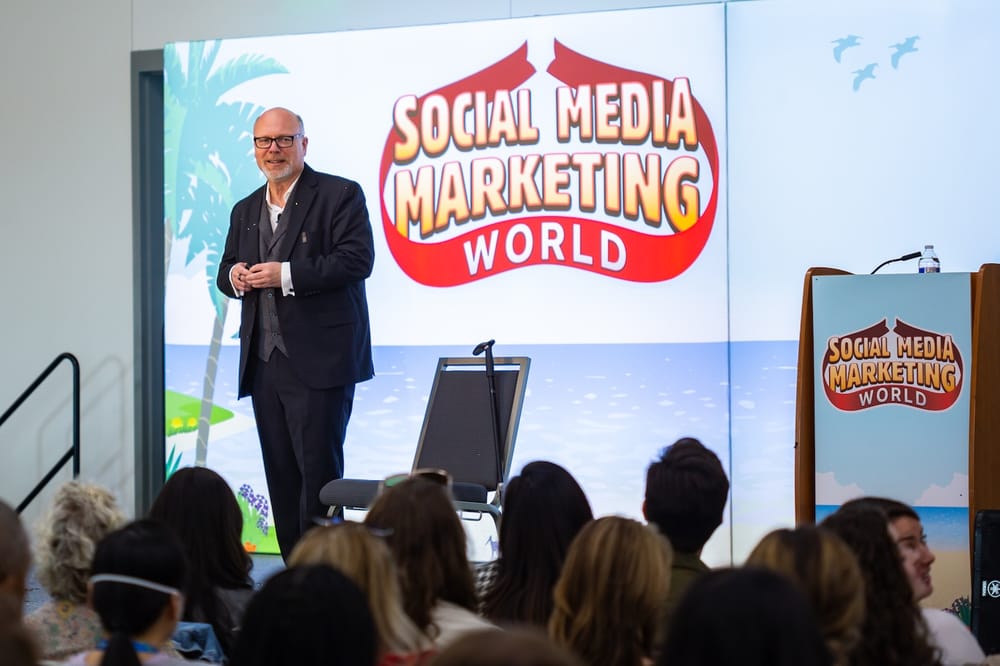
Ray Edwards Brings the Power of Persuasion & Infinite Captions—to Social Media Marketing World
When legendary copywriter Ray Edwards took the stage at Social Media Marketing World 2023, he didn’t just share a message—he became the message. In this powerful recap, discover his biggest insights on persuasive copywriting, why authenticity still wins, and how he introduced Infinite Captions—the new AI-powered tool from ClarityScribe that’s rewriting the rules for social media content creation.

Product
Built For
ClarityScribe.ai © 2025 Clarity Consulting, LLC. All rights reserved.